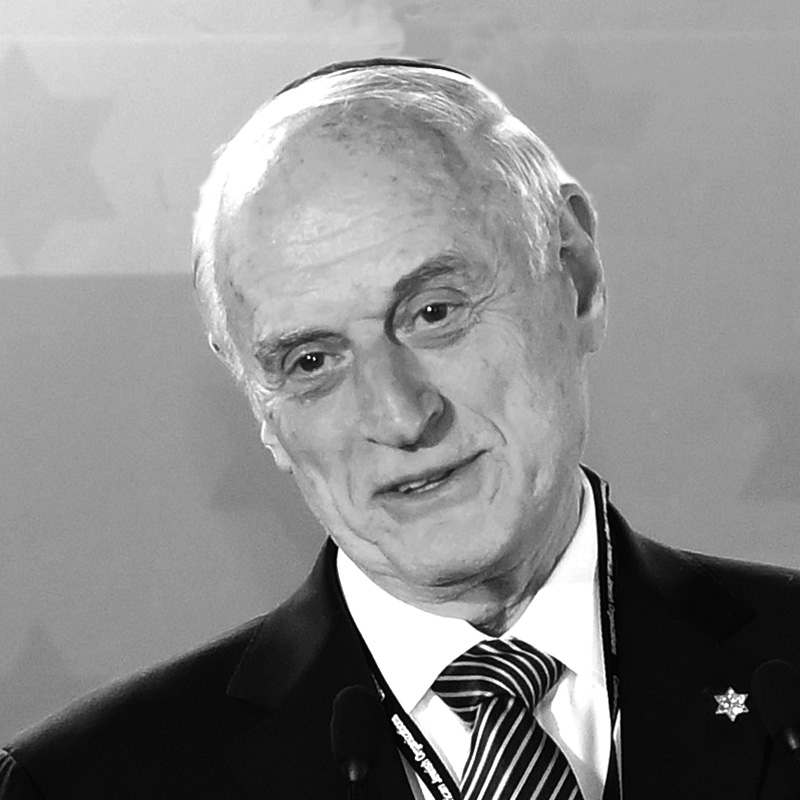
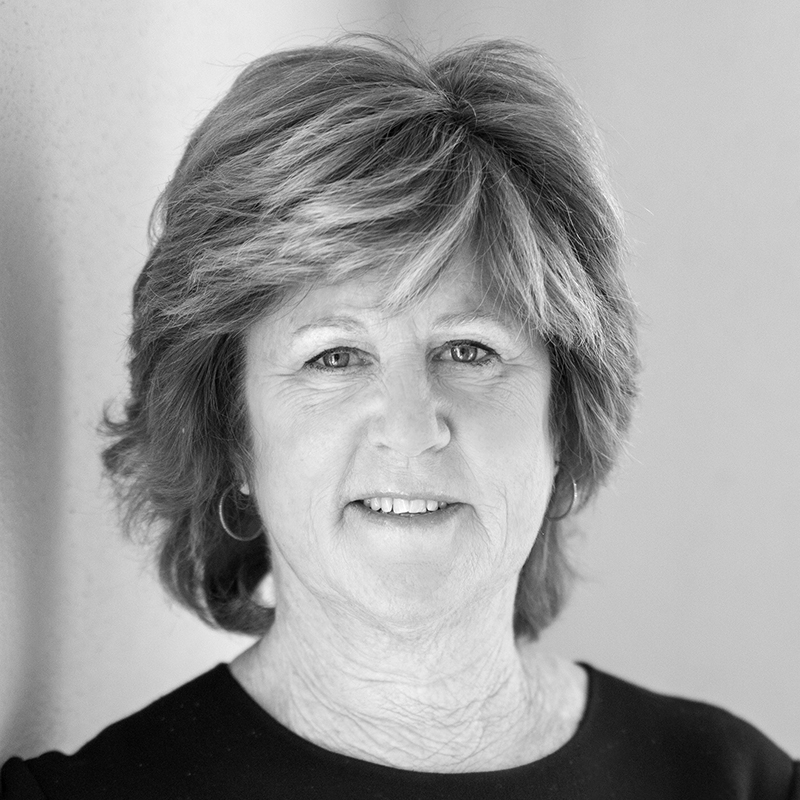
How has Jewish influence shifted over the last decades, and how can Jewish leadership exercise power effectively in a rapidly changing world? Sapir Associate Publisher Ariella Saperstein sat down with longtime lay leader Julie Platt and Malcolm Hoenlein, a former executive vice chairman of the Conference of Presidents of Major American Jewish Organizations (1986–2019), to explore these and other questions.
Ariella Saperstein: Something that we’ve been talking about as we’ve been putting this issue together is the difference between power and influence. Sometimes people with power actually don’t have much influence, and people who have great influence may lack what we think of as power. What do each of you think about the difference between Jewish power and Jewish influence?
Julie Platt: At the last AIPAC Summit, Tal Becker made the point that we ought to be leaning into our power, not being ashamed of or hiding it, understanding we are in a time when we have to use our voices, our resources, the positions we hold. But the terms power and influence aren’t where I find myself. Living my values and trying to have an impact are what guide my work. I’m not afraid to use my voice; I’m not afraid to use the power that I may have in the positions I hold, but my intent is always focused on outcomes.
Malcolm Hoenlein: When I was very young, even a pre-teen, I realized that Jews cannot turn our fate over to others. I got involved in a U.S. Senate race when I was 11 and from then on was involved in political life in whatever way I could be. When I was 12, I traveled with Adlai Stevenson for two days, after sneaking into his hotel room, when he was campaigning for president.
It’s often how others perceive us that determines our power. And also, how we perceive ourselves. But power is something that you have to treat with great care for it to be effective. I liken it to a muscle: The more you exercise it right, the stronger it becomes. If you abuse it, you destroy it. Too often, we have either abused the opportunities of Jewish power or not taken advantage of them.
Once the prime minister of Japan asked me, “Why are Jews so influential?” It was the first question he asked me. When I caught my breath, I said, “Because people who are involved have influence. People who don’t get involved don’t have influence.” I explained that Jews get involved because we care, and not just about our own. Remember the tsunami? Who was the first community to stand up and help? What country flew in planes with aid?
Platt: One of the misuses of influence or power is Jew against Jew. We’re not all going to agree, but we’re a small people, and to use our power effectively, we have to stop defaming one another. I was vice chairwoman of the board at the University of Pennsylvania during the height of the encampments and the leadership crisis that followed, and I told my children that all the emails I received condemning what I was doing came from Jews, questioning my role as a Jew. I found that so disappointing when what I was doing was advocating in behalf of the Jewish people.
I disagree with one of the leaders of a major Jewish organization. I texted him directly. I told him what I objected to, and we got into a dialogue together. I did not post my disagreement with him so that a thousand other people could agree or disagree with me or him publicly. That’s just wasted time that could be spent doing good things for the Jewish people.
And to Malcolm’s last point, I have fashioned my whole life on Ann Richards’s adage: If you don’t have a seat at the table, you’ll be on the menu for lunch. I think back to a time when my father was the president of the school board in Wichita, Kansas. There were so few Jews. But he believed that he had to be an advocate for the integration of the school system between the black and white communities. And so he ran for president of the school board and was elected, and he integrated the school system. But had he not raised his hand? That’s a different story; change would have taken longer.
Hoenlein: That’s why I devoted my whole life to working in umbrella organizations, because I really believe in klal Yisrael. I believe in the unity of the Jewish people and that in that unity lies our strength. When we come together, we recognize that what we have in common far outweighs our differences. If you focus on what we have in common, you’ll see that 95 percent of the time, we can arrive at some consensus position that the extremes may not be happy with but that fundamentally everybody can live with, and if you build on that, you build confidence with one another.
Saperstein: It sounds like you both are arguing that we’ve lost a lot of that unity. Are you both also making the argument that we’ve lost Jewish communal influence as a result? With the recent election of BDS-supporting Zohran Mamdani in the biggest Jewish city outside Israel, for example, and progressive candidates highly critical of Israel seemingly on the ascent, including in recent primaries, is it possible to not be worried about a loss of influence?
I have fashioned my whole life on Ann Richards’s adage: If you don’t have a seat at the table, you’ll be on the menu for lunch.
Platt: I am not arguing that we have lost communal influence. We have not. I actually think our political activism has been energized in louder and more impactful ways than ever. I just think we would be even more influential if we weren’t spending time publicly arguing with one another but instead fighting the challenges we face. Our energy is better spent doing the work—speaking loudly about our communal priorities, our security, our support of Israel. Let the haters hate. As my son Jonah says, everyone has to go full Jew.
Hoenlein: It’s true the rules have changed. Power does shift, and it does diminish at times because of demographic shifts. The great power centers like New York have changed. Today, we’re dealing with virulent antisemitism, which is, to me, a life-and-death issue. But it doesn’t change the fact that we live in America, where we have a vibrant Jewish community with an immense capacity for influence. Our institutions have to change the way we go about it, but we still have entrée with foreign governments. What other community is received by heads of state all over the world, as we are when we travel?
On Capitol Hill, the doors are still open to us. They want to hear what we have to say, and we should want to hear what they have to say. One of the lessons is that we also have to hear what members of Congress who disagree with us have to say on issues vital to our concerns.
Clearly, recent events and primaries are a warning to us of the shifting political sands that pose serious challenges for us and our future. The fact that people so blatantly hostile to Israel and to the community can be elected requires us to reassess how we go about organizing our communities, mobilizing, and motivating them. It is too easy and wrong just to give up.
Saperstein: Malcolm, you spent so much time leading an organization that, as you mentioned, served as an umbrella for a lot of other organizations representing much of the organized Jewish community. In the last number of years, Jewish business people, philanthropists, and other political officials have pressed publicly on issues of Jewish concern, sometimes forcing significant societal change through media pressure, litigation, political leverage, or financial moves. These have, arguably, sometimes shown faster results than the work of Jewish institutions. Do you perceive this to be a shift in the locus of Jewish power? And what might this mean for Jewish institutions in the future?
Hoenlein: The answer is yes and no. If we look through American history, there are always shifts in where the fulcrum of power rests. In the Gilded Age, it was powerful individuals. Then we saw collective leadership gain strength, led by organizations such as B’nai B’rith, the American Jewish Committee, and the ADL. In recent times, we’ve seen more of a professionalization of organized Jewish life and professionals playing a bigger role as partners with lay leaders. We may be moving back toward focusing on leaders outside of official roles in our institutions to set the tone and agenda. The role of family offices, foundations, and communal funds is also increasing.
Saperstein: Julie, you’ve been a top lay leader for many years, do you see it the same way?
Platt: Organizations and individuals have different roles, and we can’t exist without both. Jewish Federations of North America led the entire North American Jewish community the last several years around the professionalization of security in every community. An individual cannot do that. The rally that happened right after October 7 was the coming together of every organization in North America, all working as partners.
I have done this for a long time and have chaired many boards. Success is much more likely when a very productive relationship exists between the lay leader and the professional. When there is transparency, respect, shared values, and a shared mission, there is nothing more satisfying than the work that lay and professional leadership can do together.
If there’s anything negative I’ve encountered along the way, it’s the continued sexism that still happens in our Jewish leadership. I push against that. I encourage women leaders to raise their hands and to never think of themselves as less qualified for any position than anybody else is, lay or professional. I try to empower women to be confident of their ability to lead and to push back on anyone who says or acts differently toward a woman in leadership.
Saperstein: How does Israel have an impact on the way Jewish power is seen in America?
Hoenlein: What happens in Israel affects how we are seen here. We see it more and more, especially since October 7. But Israel has empowered our communities in ways that people never think about. Consider what might have happened if we didn’t have a State of Israel. What would have become of Soviet Jews, Ethiopian Jews, Syrian Jews, Iraqi Jews, Iranian Jews, Yemeni Jews? They would have been written off to Jewish history. Instead, Israel has become the center of Jewish life. It’s more than half the Jews of the world. That doesn’t diminish the importance of the Diaspora, but as community life in many countries becomes less and less viable, Israel will loom larger. What has changed since the Shoah is not that the world has become a more caring place for Jews. The difference is the creation of the State of Israel, with all of its capacities.
Platt: My reaction to that would be very different. There is no question that the lack of education, lack of understanding, and the deeply challenging imperative that we have as Zionists to help people develop a nuanced and complete understanding of what is happening in the Middle East have made it very complicated in ways it never has been before. It is up to us, Diaspora Jews, to use our voices, to be activists in small settings or large, or both, to educate and clarify and be unafraid.
Saperstein: It feels to me that we live in a culture where politics increasingly permeate everything. And we, as a Jewish community, are trying to maintain influence over issues that we care about, but we also, to some degree, have been constrained by a desire to remain apolitical and to retain friends across the political spectrum. Abraham Foxman, the legendary director of ADL who passed away recently, had credibility across the political spectrum, but his tenure feels already from another era. At the same time, the Jewish community has done a lot of work around coalition-building, trying to build allies with other communities across issues of shared concern. But even that work has been politicized in many ways as coalitions are increasingly identity-based rather than issue-based. How do you think we should be adapting, as Jewish individuals and institutions, to be effective in this changing landscape?
What has changed since the Shoah is not that the world has become a more caring place for Jews. The difference is the creation of the State of Israel, with all of its capacities.
Platt: I don’t think in 2026 it is any less important to maintain bipartisan support, particularly in the fight against antisemitism and in support of Israel, so I do not shy away from speaking frequently from that perspective.
My kids will call me Pollyanna, but I am more hopeful than most about partnership and allyship for the Jewish people. I’ll give you some quick examples. I work very closely with Van Jones on the partnership between the black and Jewish communities. We are not without disagreements, but it has never overshadowed his leadership and desire for us all to remember that we’re in this together. I belong to Sinai Temple in Los Angeles, and our rabbinic leadership recently welcomed the leadership of the six Hindu temples in Los Angeles. The allyship between those two communities is only growing. When protesters disrupted an interfaith event entitled “Innovating Safety, Empowering Communities” at Wilshire Boulevard Temple in Koreatown, the response and allyship of the Korean community was so hopeful and inspiring. And I just hosted a private fundraiser in my backyard for someone from the Latina community, and we both think we have not done enough to bring those two communities together, and we need to.
Hoenlein: I am still hopeful, but not more hopeful than I have been in the past. The movement for Soviet Jewry built coalitions with every sector. We made this the No. 1 human rights cause in the world because we were there and reached out to others to join us. I know people who lost their jobs because they devoted so much time to the Soviet Jewry movement, who literally lived day and night to give meaning to “never again,” to what I believe is a holy bond of arevut, that we are responsible for one another and for others as well. That is something that is often missing today.
Studies show parallels between discrimination against Jews, Hindus, Indian Americans, and Asian Americans. We should build coalitions to work together to counter such biases, but it can obviously have other ramifications, political ramifications, including regarding Israel and other issues of concern to us.
Some of the other communities in America are investing a great deal, including with large amounts of foreign money, to train young people to run for school boards, city councils, then Congress, and eventually the Senate and the White House. We need to provide financial support and guidance, as well as inspiration and motivation, to the next generation. We are not spending enough to train young people to get involved, to see a life of public service as a viable career, something that would be as valued as becoming a doctor.
Platt: I don’t think we’re not. I just think we’re behind.
Hoenlein: When the Senate votes for aid to Israel and Jewish security, it’s because of the support of non-Jewish members.
Antisemitism is not just against Jews, it’s against American values that we all share. It is against Western civilization. While Jews traditionally may have been the first victims, they are never the last. That’s true of every society that has allowed antisemitism to go unchecked. Those societies paid a heavy price.
Saperstein: Young people, as is often the case, perhaps, but increasingly these days, don’t seem to trust our institutions, including many traditional Jewish institutions. How can Jewish organizations regain the trust of young American Jews and inspire them to get more involved? And who are the new Jewish leaders who will inspire that next generation?
Hoenlein: Following October 7, I saw so many accomplished people seek to rediscover their Jewish identity and find meaningful engagement. A wave of talented young people brought their passion and energy to this work for the first time. They could be the future leaders, more attuned to the demands of the 21st and 22nd centuries.
Platt: I come to this from the Jewish Federation world, and we have young-leadership programs, in the Los Angeles Jewish community and nationally at Jewish Federations of North America, that are overflowing. They are about all kinds of Jewish engagement. JFedLA’s New Leaders Project produces an awful lot of Jewish elected officials and Jewish caucus members in the State Senate of California. The National Young Leadership Cabinet is the largest it’s ever been at Jewish Federations of North America. It’s just not true that we aren’t engaging young people. There are young leaders all over the place. But it’s the ones who don’t like us much, or are disenfranchised right now, who are loud. And that’s our work: to educate and activate and not shy away from those who disagree with us right now.
Hoenlein: That program should be replicated in every state, in every community, training and raising money to enable young Jews to run for office or play other roles in political or civic life.
The question to me is how to get more people to see traditional Jewish organizational work as relevant to them. It’s true that more are getting involved in fighting antisemitism, for instance, but they created scores of new organizations over the last two years to do it because they didn’t find the answer in the existing frameworks. Creativity is a good thing, and you’re absolutely right about the loud voices—we have to find a way to invite them in, to listen to them. They’ve said “Don’t bring us legacy organizations, they failed us, they don’t relate to us, and they haven’t welcomed us.” I see many young Jews who do care and want to do something—volunteering for security, volunteering for other things—but there is no magic formula.
Platt: I tend to believe that we don’t know what the answer is in the fight against antisemitism, so we have seeded a lot of different organizations and individuals to think and create and innovate. I’m not willing to say it can only happen within the organized Jewish community. If you’ve got some great idea, and you want to try it, zey gazunt, and we should help you do it.
Hoenlein: I’m not sure that people creating new initiatives know about some of the most effective and large-scale efforts that are underway. They’re not publicized, they’re not meant to be grassroots operations. They are highly professional and may have limited public outreach. Be gadflies in the community, but do it in the framework of organizational life and in constructive ways such that they will be heard.
Saperstein: Sapir’s editor, Bret Stephens, got attention earlier this year for arguing that the fight against antisemitism is more or less a waste of time and money, and Jewish institutions should instead be focusing on strengthening Jewish connection, identity, and education. Do you agree?
Platt: I don’t think we have the luxury of doing one or the other. We’ve got to do both. My personal fight against antisemitism includes a focus on college campuses, in the faculty—that’s where we have a continuing problem. But we have to fund Jewish education and get kids to summer camp and Israel, too.
Hoenlein: I don’t think Bret is right that you tear down the infrastructure completely, but I do believe it has to be reformed and rationalized. I have recently called for a DOGE of the Jewish community to get a group of key lay leaders, philanthropists, forensic accountants, and others, working together with representatives of organizations to sit down and evaluate each of the initiatives to see which deserve community funding. There are many programs and organizations we don’t fully understand. I would like to see an assessment that, for instance, identifies organizations doing the same thing. Evaluating how they can become one, or cooperate and foster a more responsible and effective use of the dollars we have.
There’s an amazing person spending tens of millions of dollars of his own money creating schools for Jewish kids who can no longer stay in public schools because the situation has become intolerable, and he already has established numerous Zucker schools across the United States. There are so many wonderful initiatives by lay people concerned about the issues that we are talking about.
But the system itself is still remarkable. When I look at the chairpeople of the Conference of Presidents, of JFNA, of others, what community produces leadership like that? Somebody like Julie, who has so many responsibilities and says, “I’m giving up literally everything because I’m on-demand for this work.” We should be thanking them and saying, “Let’s work together to make things better, even if we have to shake the cobwebs.”