103 results
March 7, 2026 43 Min

The Silicon Dome – with Yonatan Adiri

In an age of geopolitical fragmentation, a nation’s strength is often defined by its technological indispensability. Israel’s success, argue Yonatan Adiri and Shachar Lotan in a new SAPIR essay, hinges on embracing a new technological strategy called The Silicon Dome.

On March 4th, SAPIR Editor-in-Chief Bret Stephens and Israeli entrepreneur and former chief technology officer to Shimon Peres, Yonatan Adiri joined for a live virtual conversation where they unpacked what a Silicon Dome is, how it might operate, and why it is a necessity for the Jewish state.

A note to viewers: only moments before the SAPIR virtual event was scheduled to begin, the production team received a message from Adiri that he and his family were notified of an incoming missile to their area, and would need to take shelter imminently. After an “all-clear”, Adiri joined for us for the conversation.

February 24, 2026 26 min

Sneak Peak of the “Aspiration” Issue – with Bret Stephens and Rabbi David Wolpe

Tomorrow, we launch our second issue on Aspiration—devoted to audacious ideas for a thriving Jewish future. Four years ago, when we published our first issue, the world was a very different place. In his editor’s note, Bret Stephens writes: “Jewish aspiration after October 7 is a different story. Paradoxically, it requires more realism and more ambition.”

So here we are, returning with new questions: Is the Jewish world taking enough risks? Has American Jewish life become too convenient? Should we, indeed, stop fighting antisemitism and instead fight Jewish complacency? And did Bret go too far when he called for the dismantling of the ADL?

Join Editor-in-Chief Bret Stephens and Rabbi David Wolpe for a wide-ranging SAPIR Conversation on these questions and more.

Listen:
February 4, 2026 48 MIN

SAPIR Conversations with KIND Snacks founder Daniel Lubetzky

When founder of KIND Snacks Daniel Lubetzky looks at a glass of water, he doesn’t see it as half empty or half full. He sees an opportunity to fill up the cup. 

In this SAPIR Conversation with Rabbi David Wolpe, Lubetzky explains how this mindset shaped his journey from arriving in the United States as a 16-year-old immigrant to becoming a multi-billion-dollar entrepreneur who founded one of the most recognizable health food brands in the country. This success propelled him onto the hit TV series Shark Tank as one of the “sharks” and into a life as a social entrepreneur, investor, philanthropist, author, and civic leader. Above all, Lubetzky is a builder. As the son of the Holocaust survivor, he views it as his mission to build bridges across seemingly impossible divides – and encourages us all to use our power to do the same. 

Read the SAPIR essays and op-eds referenced in this SAPIR Conversation:  

Listen:
January 21, 2026 46 min

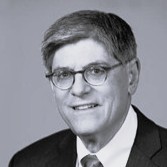
SAPIR Conversations with Treasury Secretary Jack Lew

Jack Lew was drawn to a mission of service well before becoming the 76th U.S. Secretary of the Treasury. As a kid in Forest Hills, Queens, he stepped up as his high school’s inaugural Earth Day coordinator. Inspired by a local rabbi, he supported low-income housing in his hometown. Raised in a home committed to Jewish life and Zionism but also social justice and the community around him, Lew never wavered from an equal sense of responsibility to both worlds. In fact, it’s that very outlook that led him to a storied career in public service without ever sacrificing his Jewish faith and practice. 

On January 13th, Rabbi David Wolpe sat down with Secretary Lew for an in-depth SAPIR Conversation. Together, they reflected on moments both personal and historic: the time President Clinton left Lew a voicemail on Shabbat; the pivotal conversation he had with President Obama before accepting the position of White House Chief of Staff; the experience of serving as U.S. Ambassador to Israel weeks after October 7th. They also discussed the future of U.S. military assistance to Israel, the fate of American Jewry, and – this being a SAPIR issue on Money – his understanding of the ideal form of Tzedaka, or charity. 

Read the SAPIR essays referenced in this SAPIR Conversation, including: 

Listen:
December 18, 2025 58 min

Poverty and Jewish Community with Ilana Horwitz

Economic vulnerability affects 1 in 4 American Jews, but it doesn’t affect all of them equally, writes Tulane University sociologist Ilana Horwitz in her recent SAPIR article, “Poverty and Jewish Community.” The difference between a life of temporary hardship and one of permanent poverty may, in some circumstances, boil down to whether a person or family is embedded deeply in Jewish life. Why is that the case? What does this finding reveal about the invisible safety net of Jewish belonging? And what are the practical interventions at our disposal to help alleviate financial strain?

Horwitz joined Managing Editor Phil Getz for an in-depth discussion about poverty and the American Jewish community.

Listen:
December 8, 2025 1 hr 1 min

A Jewish Sovereign Wealth Fund — Yes or No?

American Jewry has long thrived in a society built on institutions. But today, we live in an anti-establishment age, where subtlety fuels suspicion and open displays of power are seemingly valued for their authenticity. In this environment, should America’s Jews think and act like a state, as Jordan Chandler Hirsch argues in his essay “The Need for a Jewish Sovereign Wealth Fund”? Or is this proposed cure an abandonment of the features that have long defined American exceptionalism — and the Jewish experience within it, as Roger Zakheim argues in response?

Hirsch and Zakheim joined Bret Stephens for a thought-provoking conversation on the future of the American Jewish community in an anti-institutional era.

Listen:
December 3, 2025 55 min

Building Israel’s Trillion-Dollar Economy with Michael Eisenberg

Of Israel’s many achievements since October 7, none perhaps was as unforeseen as the Tel Aviv Stock Exchange reaching an all-time high two years since the start of the war. While this reflected the resilience and dynamism of the start-up nation, there are troubling signs ahead for Israel’s economy: the high cost of war; stagnant economic sectors; bureaucratic malaise; high population growth; and more. Can Israel make the adjustments and double its GDP over ten years? Can Jews in the Diaspora help it get there?

Israeli venture capitalist Michael Eisenberg joined SAPIR Editor-in-Chief Bret Stephens for a conversation about what it will take for Israel to become a trillion-dollar economy.

Listen:
December 1, 2025 1 hr 3 min

The SAPIR Debates: Is There a Realistic Future for the Two-State Solution?

The assassination of Prime Minister Yitzhak Rabin 30 years ago, in November 1995, marked a major turning point in the prospects for peace between Israelis and Palestinians. Now, three decades later, the likelihood of a safe and secure Israel coexisting alongside an independent Palestinian state appears increasingly more remote.

Despite growing international pressure, Israeli support for a two state-solution continues to drop while skepticism that peace is achievable continues to grow. In the shadow of the October 7th attacks and a two-year long war in Gaza, is lasting peace between Israelis and Palestinians possible? Is there a realistic future for the two-state solution?

On November 17, SAPIR hosted a debate on this question on the plenary stage of the Jewish Federations of North America’s General Assembly in Washington, D.C., with Israeli journalist Tamar Ish-Shalom, Israel Policy Forum chief policy officer Michael Koplow, and Commentary editor John Podhoretz.

Listen:
November 11, 2025 26 min

On Money with Bret Stephens and Rabbi David Wolpe

Why does the stereotype about Jews and money endure? Is Judaism a contractual or covenantal religion? Is Jewish life today too expensive? Should the cost of Jewish education be offset by philanthropic giving or public funding? 

Join Bret Stephens and Rabbi David Wolpe for a wide-ranging SAPIR Conversation on these questions and more, which are featured in the newly released issue of the journal on Money.

Listen:
October 30, 2025 1 hr 39 min

The SAPIR Debates: Does Zionism Have a Future on the American Left?

In the shadow of the war in Gaza, shifting ideological fault lines and coalitions are redefining the boundaries of progressive politics nationwide. The normalization of rhetoric on the Left that questions Israel’s legitimacy has become a source of growing discomfort, if not concern, for Zionists across the political spectrum. Likewise, actions of the Israeli government – before and since the recent war – have prompted those on the Left to reevaluate their association with and support for Israel. Nowhere is this phenomenon more pressing than in New York City, home to more Jews than any city in the world. On both a local and national level, many are asking: can one be both proudly Zionist and firmly on the Left, or has the divide grown too wide to bridge?

Moderated by SAPIR Editor-in-Chief Bret Stephens, this second of the SAPIR Debates featured four distinguished voices:

  • Kathy E. Manning, board chair of the Democratic Majority for Israel and a former two-term member of the U.S. House of Representatives
  • Yehuda Kurtzer, president of the Shalom Hartman Institute and host of the Identity/Crisis podcast
  • James Kirchick, contributing opinion writer to the New York Times and best-selling author of Secret City: The Hidden History of Gay Washington and The End of Europe: Dictators, Demagogues, and the Coming Dark Age
  • Batya Ungar-Sargon, author of three books, including the forthcoming The Left and the Jews, and host of BATYA! on NewsNation

The SAPIR Debates is a new series that features a spirited but civil exchange of views on the most consequential issues facing the American Jewish community.

Listen: