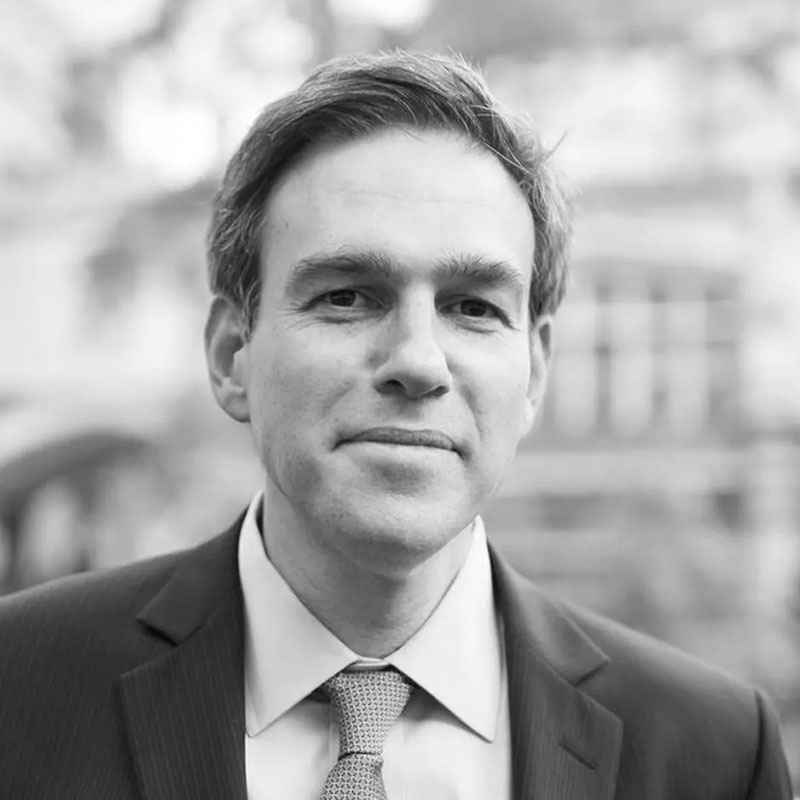
A law school student at Harvard once asked me how I dealt with the power that comes with being an opinion columnist at the New York Times. I had to stifle a laugh. Contrary to what she seemed to think, products do not move, or troops deploy, or guilty verdicts get handed down, on account of anything I say or write. Indeed, with the qualified exceptions of my children, my finances, and my dog, I wield power over nothing and nobody.
What I have, at best, isn’t power but influence. It’s important to understand the difference. Power is the capacity to control resources or compel behavior. Influence is the ability to persuade people and shape public opinion. Power does not require assent. Influence does. Influence can be a means to power, and influence can flow from power. But it is not power itself and, as often as not, can be at odds with it.
For Jews, the paradox of our time is this: In many ways, we are as powerful as we’ve ever been. Yet we are also at one of the lowest ebbs of our influence.
Consider various indices of Jewish power. Despite the disappointments of the Iran war, Israel fields the Middle East’s most capable military and probably the most capable air force in the world save for those of the United States and China. With a population smaller than that of the Czech Republic, it is the world’s 18th-largest exporter of digital technology, the seventh-largest exporter of arms, and the fourth-largest per capita creator of “unicorn” companies with a valuation of more than $1 billion. Its per capita GDP exceeds that of Germany, Canada, and Qatar. There are more billionaires in Israel (42) than in Japan (41) or Saudi Arabia (15). As for the United States, where Jews account for about 2.4 percent of the population, 10 senators and six governors are Jewish, as are five of the 10 richest Americans and six of the eight presidents of the Ivy League. Jews continue to be captains of industry in everything from sports to finance to high tech to agriculture.
Yet the trajectory of Jewish influence has moved in the opposite direction. JD Vance, the vice president, was crass but not far from the mark when he said in June that “Donald J. Trump is the only head of state in the entire world who is sympathetic to the nation of Israel at this moment in time.” In New York — the city of Herb Lehman, Ed Koch, and Mike Bloomberg — Democrats just nominated a slate of Israel-hating congressional candidates, one of whom openly cheered the attacks of October 7. Chuck Schumer, the minority leader in the Senate, published a book about antisemitism in 2025; he had to cancel most of his speaking tour for fear of incessant heckling. Ten years ago, there were three Jewish members of the Supreme Court. Now there’s one.
Things are no better in the cultural sphere. At America’s bicentennial, Saul Bellow, Norman Mailer, and Philip Roth all contended for the post of the great American novelist; Irving Kristol, Norman Podhoretz, and Milton Friedman were the great public intellectuals of the Right; Michael Walzer, Susan Sontag, and Paul Samuelson the great intellectuals of the Left. They have no real equivalents today. Hollywood, an industry created by Jews, had no room for Jews when its own museum, the Academy Museum of Motion Pictures, created an exhibit in 2021 to celebrate diversity in the movies. Three years later, when it sought to correct the error amid an uproar, it opened a new exhibit on the industry’s Jewish founders that openly demonized them, causing a fresh uproar. At elite universities, Eric Kaufmann has found that the share of Jewish undergraduates fell from around 20 percent at the turn of the century to around 7 percent in this decade, while the share of young Jewish academics has fallen to about 4 percent. In the art world, one Jewish museum director had her home vandalized with Hamas graffiti; another was forced out over spurious racism allegations; a third resigned her position for being insufficiently attuned to “the movement for change” around the time of the George Floyd protests.
“In 2014 there were 16-20 Jewish artists featured at the Whitney Biennial,” noted the writer Jacob Savage in a seminal 2023 essay in Tablet, “The Vanishing.” “After a very public campaign against a Jewish board member with ties to the Israeli defense establishment, the curators got the message. The 2022 biennial featured just 1-2 Jews.”
And then there is our dwindling social capital, registered in our inability to defend some of our most basic communal interests. Fifty-one years ago, Daniel Patrick Moynihan, a Catholic Democratic professor representing a Protestant Republican president as the U.S. ambassador to the United Nations, could denounce the “Zionism is racism” resolution in ringing language that, a year later, would help propel him to the Senate. Today, the mayor of New York can be denounced by 700 rabbis for using antisemitic tropes to denounce AIPAC as “monsters” who deploy “millions in dark money” to “preserve their power,” and the reaction of liberal America amounts to a yawn and a shrug. On the Right, the so-called Groypers who follow the Hitler-admiring media personality Nick Fuentes are an ascendant force among young conservatives. Yet when Ben Shapiro denounced Fuentes (along with Fuentes enabler Tucker Carlson) at a Turning Point USA conference in December, he was derided for it by Megyn Kelly, the former pro-Israel podcaster who has learned which way the wind is blowing.
And on it goes — not always a uniform push toward Jewish social, cultural, and political diminishment, but an unmistakable and unrelenting one. How did this happen? And what, if anything, can be done to reverse it?
Begin with the most benign interpretation possible: What many Jews see as a loss of influence may, in many respects, be a natural downsizing as other highly motivated minorities rise to some of the high places we once occupied. Should we, for instance, complain that talented Asian kids are the “new Jews” of elite academia? And are things really so dire when Noah Kahan, the folk-pop music sensation from Vermont, proudly describes himself as “the Jewish Ed Sheeran”?
Yet it’s a mistake to suppose that our influence is waning in much the way the influence of the old WASP establishment waned: that is, gradually and gently. Our influence is under a sharp, deliberate, and intensifying assault.
Part of the assault comes from the historic enemies of the Jews: antisemites masquerading as anti-Zionists along with antisemites of a more straightforward variety. They have been greatly aided by the culture’s gatekeepers (some of them Jewish), who have decreed, for instance, that the pro-Hamas influencer Hasan Piker is a legitimate voice of the progressive Left; or that the Nazi-themed tattoo once worn by former Maine Senate candidate Graham Platner isn’t politically disqualifying; or that Tucker Carlson’s chumminess with Fuentes does little to diminish his standing within the conservative movement; or that accusing Israel of genocide is an intellectually and empirically justified position; or who think that the newsworthy fact about a man who drove his truck into a Michigan synagogue is that he had a relative killed in an Israeli airstrike in Lebanon — never mind that the relative was a member of Hezbollah.
It’s the thinking of those gatekeepers, rather than of the hardened Jew-haters themselves, that needs attention. What disposed them to begin siding with the enemies of the Jews?
It’s a mistake to suppose that our influence is waning in much the way the influence of the old WASP establishment waned: that is, gradually and gently. Our influence is under a sharp, deliberate, and intensifying assault.
A few hypotheses: They, or their institutions, take money from the Qataris. (More than $1.1 billion in Qatari funds, more than from any other foreign country, went to U.S. colleges and universities in 2025 alone.) They were educated in Marxist-adjacent doctrines — postcolonialism, intersectionality, critical race theory — that aren’t antisemitic on their face but have a way of indicting Jews as “settler colonialists,” excessively privileged, and “conditionally white.” They have been influenced by the growing political clout of younger American Muslims, exemplified by the rise of Zohran Mamdani, practicing an ideology that the Manhattan Institute’s Reihan Salam calls “Third Worldism”— a “fusion of anti-Zionism, anti-Westernism, and anti-capitalism that places the sacralized victimhood of Palestinian Arabs at the center of a larger struggle against American imperialism.” They have been influenced, also, by a human rights cottage industry that, as Danielle Haas, a former senior editor with Human Rights Watch, explained in detail in our “Friends and Foes” issue, long ago became a factory of Israel-hatred. They have lost their nerve in the face of once-fringe characters who, thanks to new forms of media, have found their voice — and the vast audiences that follow them.
All this has considerable explanatory power. But it evades the specific ways in which too many Jewish leaders — political, financial, intellectual, and communal — have contributed to the process of Jewish cultural diminishment. Three points in particular:
1) The dramatic postwar rise of Jewish influence in America corresponds with the rise of the American meritocracy, which took the place of older social-pecking orders centered on lineage, wealth, religion, race, and ethnicity. Jews became prominent in American society not through special favors from above but often in the teeth of bigoted resistance from elite universities, law firms, commercial banks, and so on. By the same token, the collapse of Jewish influence tracks the decline of the meritocracy, epitomized by the post–October 7 anti-Jewish disgraces at Harvard under the leadership of its plagiarizing former president.
Yet Jewish public intellectuals were often at the forefront of the attack on the idea of meritocracy, while Jewish academic leaders typically went along with (when they weren’t themselves championing) the DEI drift at universities and among private-sector employers. Typically, they did so in the name of fairness, which is certainly a Jewish value. What it mostly achieved, however, was widespread mediocrity — followed, almost ineluctably, with a politics of envy and resentments that were bound to have a powerful anti-Jewish current.
2) Especially in recent years, most religious, ethnic, and racial communities in the United States have established visible, powerful guardrails against being defamed by the broader society. Not the Jews! For every effort to establish a widely accepted definition of antisemitism, there is a counter-effort, spearheaded by Jews, offering a much more permissive definition. For every attempt to express a baseline level of solidarity with Israel (if not its government), there will be culturally prominent Jews loudly denouncing Israel in incendiary terms. They do so in the “As a Jew” mode whose aim, as Eli Lake has noted in Commentary, is to “credential the libels of the enemies of the Jews.”
All this makes it remarkably easy for Jew-haters to locate a Jewish source to justify their bigotries. It also helps explain why cultural gatekeepers outside the Jewish world have no clear sense of their own about where to draw boundaries. If Ehud Olmert, the former Israeli prime minister, can publicly denounce Israeli military policy as “indiscriminate, limitless, cruel,” why shouldn’t anyone be allowed to say it?
3) Compared with influential members of other minority communities, influential Jews are often reluctant to become Jewish influencers. That is, they tend to do relatively little to convert their social, financial, political, or cultural clout as Americans into assets for the Jewish people. We know this, in part, because we notice the exceptions: when Gwyneth Paltrow, for instance, shrugged off charges of being a genocide supporter by appearing in an ad for a Tel Aviv condominium; or when Josh Shapiro called attention to antisemitism in Kamala Harris’s campaign; or when Jerry Seinfeld answered a protester asking him to say “Free Palestine” by replying, “It doesn’t exist.”
On the whole, however, there is a lopsided disparity between what powerful or influential Jews have the means to do to reshape the cultural landscape in a more Jewish-friendly direction and what they have so far chosen to do. That’s part of an older reflex that encouraged Jews to understate and submerge, if not wholly erase, our Jewish identity beneath our American one — an approach that may have made sense before October 7 but is less wise, even dangerous, today.
The list is not exhaustive. But it’s an important reminder that our loss of influence has come about, at least in part, on account of our own decisions and mistakes. If nothing else, it means we have agency when it comes to changing them.
So what do we do?
Some of what needs to be done is happening already thanks to the work of Jewish influencers (using the word in the broadest sense). One of them is Edward Blum, whose legal advocacy group, Students for Fair Admissions, led the long effort against anti-meritocratic, race-based admissions policies, culminating with their being ruled unconstitutional by the Supreme Court in 2023. Another is Bill Ackman, who, largely through his lengthy posts on social media, led the post–October 7 donor revolt against Harvard and other universities that had failed their Jewish students. A third is Dan Loeb, who redirected his giving from Columbia (his alma mater) to Yeshiva University. Each of these efforts suggests the directions that the broader Jewish community needs to take to reclaim influence.
First: Join the intellectual battle against broad cultural trends that, even if they aren’t overtly anti-Jewish, tend to marginalize Jewish interests.
It’s no accident, for instance, that the Democratic Socialists of America, a swiftly rising force in national politics, are as eager to abolish billionaires as they are to abolish Israel — there is an intellectual connection (and a common ideological heritage) between the blunt socialist program of equalization and the hatred of Jewish achievement and distinctiveness. But who, particularly among mainstream Democrats, is making the moral and political argument that “socialism” was a disastrous political experiment in the 20th century that no sane American should want to repeat in the 21st? And who is funding and organizing efforts to advance that argument at universities and high schools? Milton Friedman was not offering a parochial case for Jews when he explained to a mass audience, in his documentary TV series Free to Choose, why capitalism is superior to socialism. But that program helped the broad cause of freedom while creating broad avenues for Jewish thriving.
Second: As noted at the start of this essay, power is not the same as influence — and Jews need to once again learn how to convert the former into the latter.
Ackman, as a significant (but hardly the most significant) donor to Harvard, had a modicum of power over the university. But what really mattered was his willingness to convert power into influence in a way that swiftly gained national attention, inspired other Jewish Harvard donors to withhold funds, and achieved at least some of the changes they sought. Something similar happened when a few law firms rescinded job offers to student leaders of pro-Hamas campus groups: It sent a clear message that championing anti-Jewish causes would carry a professional price. Getting Jewish corporate and institutional leaders to adopt, as part of their organizational codes of conduct, the IHRA definition of antisemitism would be a significant step forward. After all, if a business like, say, Starbucks, won’t tolerate racist activity or speech among any of its employees, why should it countenance antisemitism?
Third: The best way influential Jews can regenerate Jewish influence is to invest Jewishly.
This can take many forms. Investing in existing Jewish educational institutions, including summer camps. Or in new, high-quality, affordable Jewish day schools. Or in Israel studies programs (provided they don’t become, as often happens in academia, anti-Israel studies programs). Or in a better rabbinate. Or in secular American yeshivas. Or in the survival of smaller Jewish communities outside of Israel and the United States. Or in Jewish publishing imprints in the mold of Adam Bellow’s Wicked Son. Or in think tanks devoted to Jewish safety and thriving. Or in a reimagined and reinvigorated ecosystem of Jewish media that become training grounds for a new generation of gifted podcasters and YouTubers. Or in expanded opportunities for Jewish college and graduate students to get a degree from an Israeli university. Or in outreach to potential friends and allies in the broader world. All these opportunities and more have been explored at length in this and previous issues of Sapir.
The ‘As a Jew’ phenomenon needs to be turned on its head: from a license to scold to an instinct to defend; from contempt to warmth; from performative distancing to public embrace.
But whatever the institution or the field, the point of investing Jewishly is to nurture, sustain, and inspire Jews for whom Jewishness is the centering fact of their lives. This can but needn’t mean greater religious observance; it must mean greater curiosity, knowledge, self-assurance, and fellow feeling toward other Jews. The “As a Jew” phenomenon needs to be turned on its head: from a license to scold to an instinct to defend; from contempt to warmth; from performative distancing to public embrace. And American Jews must emerge from this depressing period not enfeebled and embattled but clear-eyed and proud.
It’s those Jews who, in ways that can’t easily be predicted now, will restore Jewish influence to its former place in American life — a place where it fears neither its enemies nor its own shadow.
July 9, 2026.